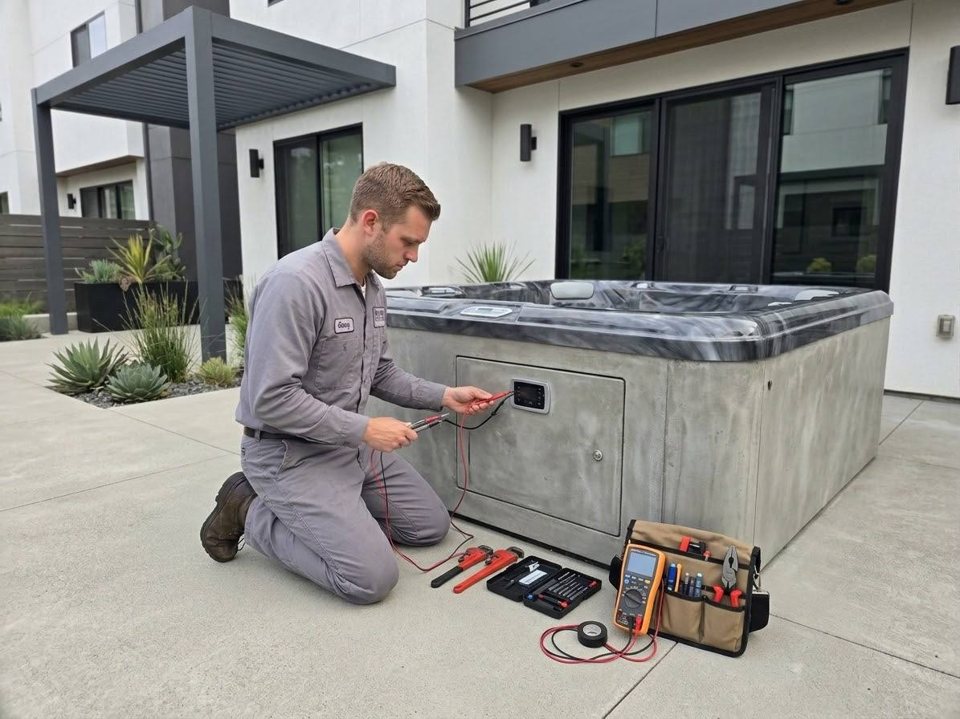
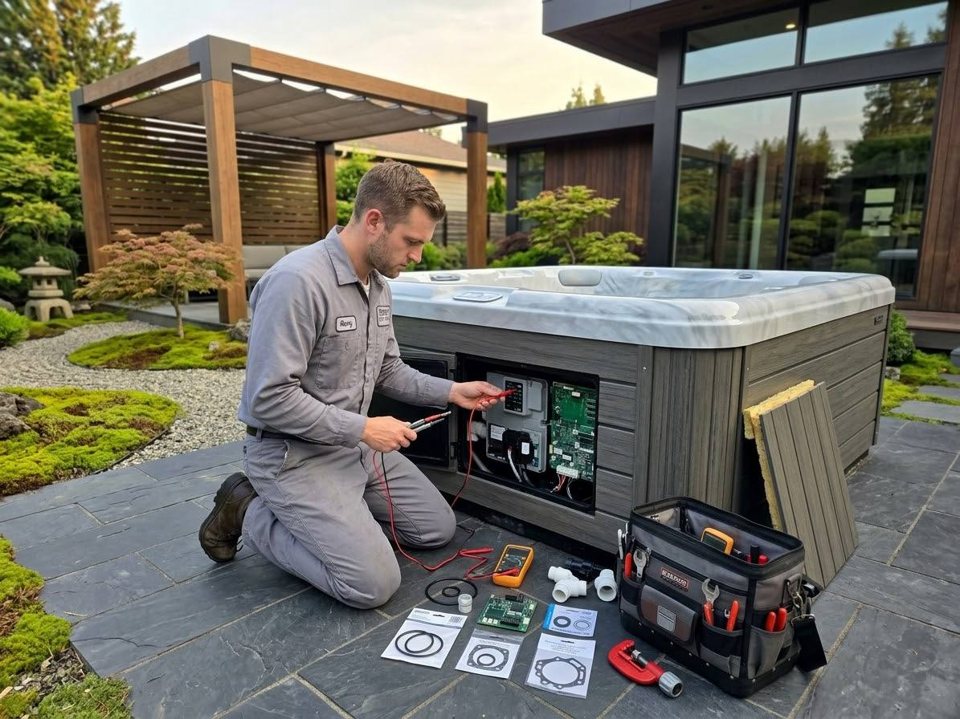
Winterization & Season Prep — how we work it
A hot tub survives a Tri-Cities winter two ways: running, with freeze protection healthy — or properly shut down, with every line blown dry and antifreeze in the traps. The disasters live in between: the half-drained tub, the 'we'll deal with it after the holidays' tub, the tub whose freeze protection died with its circ pump in October and nobody knew.
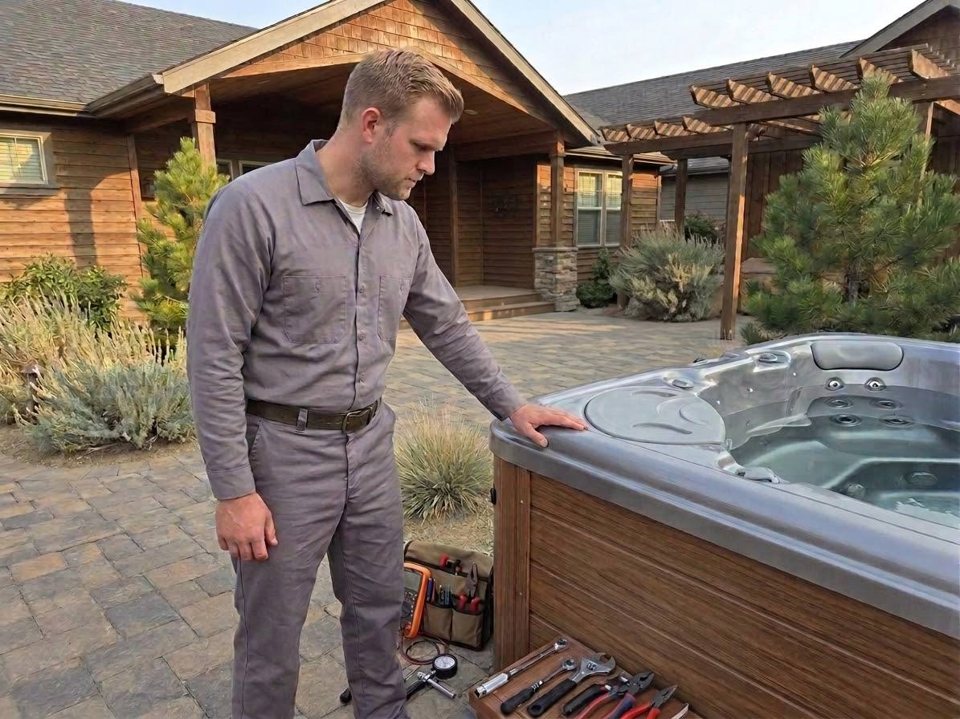
We do both ends of the season. In fall, a full shutdown or a verified low-temperature hold; in spring, a start-up that checks what the cold did before the first soak — seals, unions, freeze-sensitive fittings, and the chemistry rebuilt from flat.
What the symptom usually means
Leaving for the winter
Full shutdown: drain, lines blown out, antifreeze placed, cover secured against wind.
Keeping it running
Freeze-protection check: circ pump health, sensor sanity, and what happens at your tub when the power blips.
Half-drained since December
Call before refilling. Filling a freeze-damaged tub finds every crack at once, indoors and out.
Spring start-up
Fill, pressure-watch, chemistry from scratch, heat-up test — surprises found before soak night.
The procedure
- Lines cleared with air, not hope
- Non-toxic antifreeze in pump traps and low spots
- Cover latched and strapped for wind
- Spring pressure-watch before first heat
- Honest report of anything the freeze touched