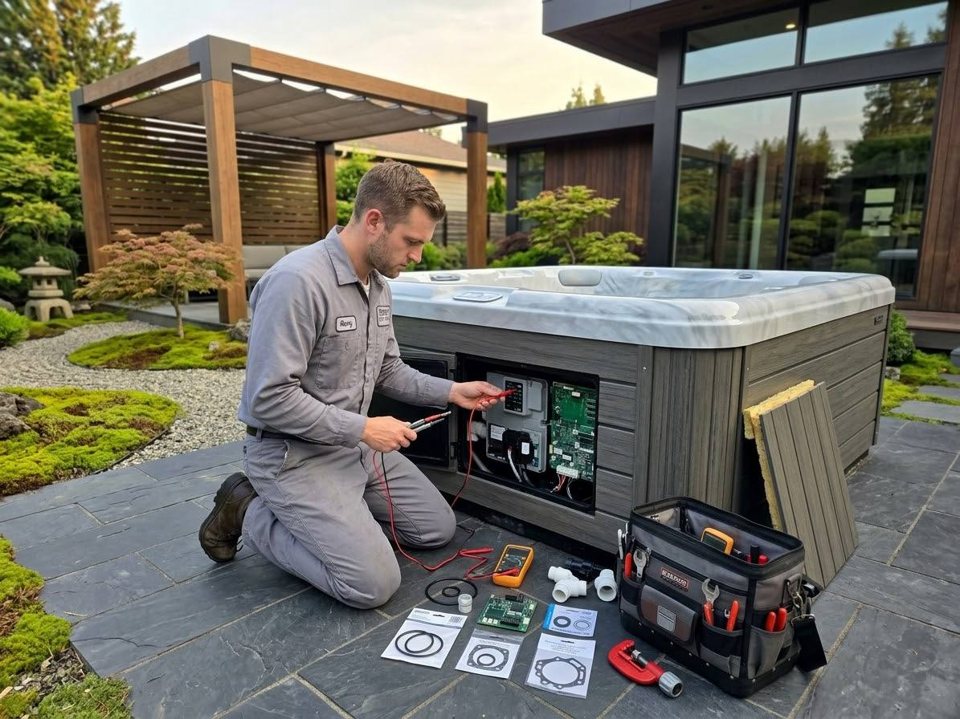
GFCI & Electrical Faults — how we work it
Ground-fault trips have a rhythm that tells the story: instant trips point at a short, trips the moment heat is called accuse the element, trips in rain accuse a wet junction or the ozonator. The procedure is patient and boring — disconnect loads one at a time until the breaker holds — and it beats every guess ever made.
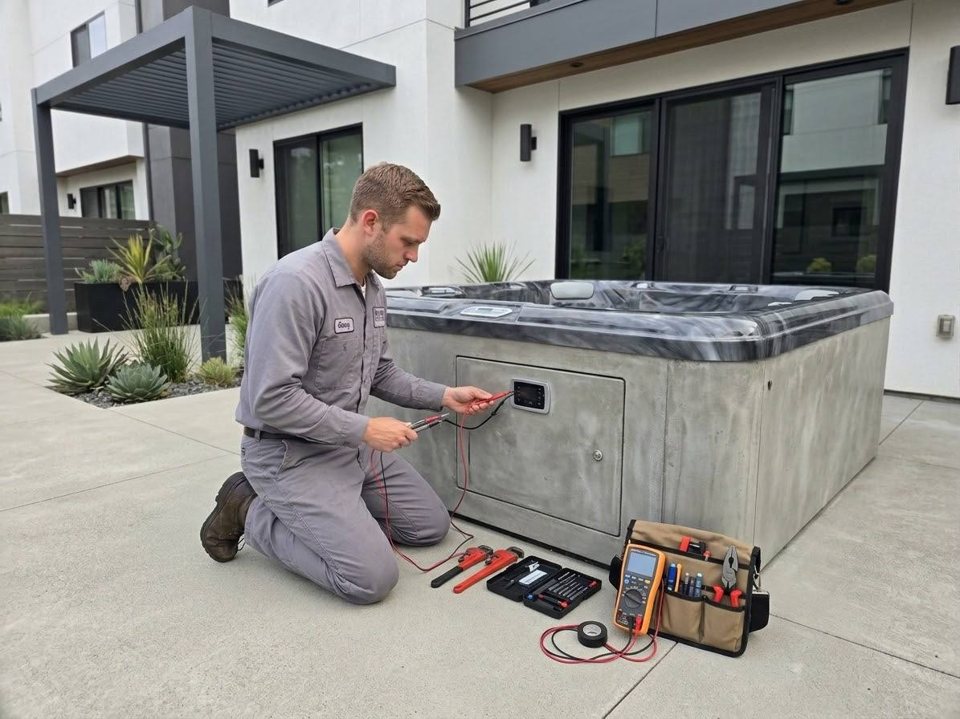
One boundary we keep sharp: our work ends at the spa cabinet. The house panel, the disconnect and the feed conduit belong to a licensed electrician, and when the fault lives on that side we say so plainly and step aside rather than dabbling.
What the symptom usually means
Trips when heater engages
Current leaking to ground through a scale-cracked element sheath. The most common confession we hear.
Trips in wet weather
Moisture in a junction, the ozonator, or a light fixture. Dry, test, seal — in that order.
No power at all
Pack fuse, tired GFCI, or a feed problem. We test to the cabinet wall and name which side of it you are on.
Random midnight trips
Usually the heater beginning to leak current as it ages — a slow confession, but a confession.
The procedure
- Load-by-load isolation, documented as we go
- Element insulation tested, not presumed
- Ozonator and lights checked before bigger conclusions
- Clear handoff to an electrician when the fault is house-side
- Written figure before repair, as always