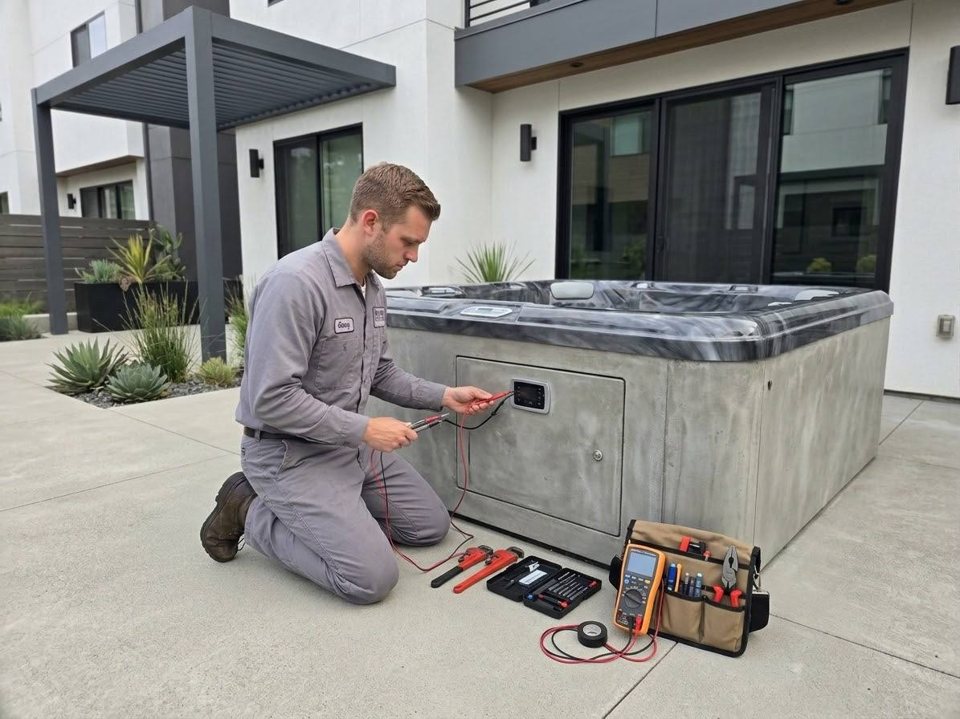
Heater Repair — how we work it
A cold spa is the classic Tri-Cities call, and the cause is rarely a mystery once the panel is off: an element that finally opened under years of mineral crust, a temperature probe drifting out of range, a high-limit that trips early, or the relay that feeds them refusing to close. Each of those reads differently on a meter, which is why the meter comes out before any part does.
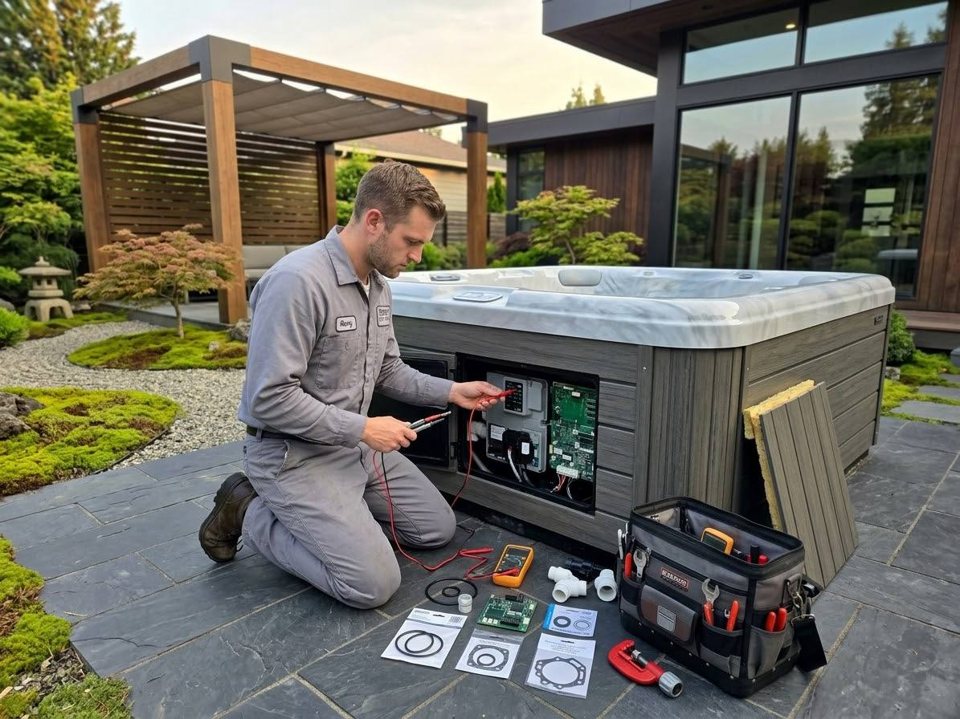
Mineral is the villain here more than age. Richland's supply carries some of the heaviest dissolved rock in Washington, and it settles exactly where the heat is. Part of every heater job at our shop is flushing what is left of that crust so the new element starts clean.
What the symptom usually means
Runs but stays cold
Everything sounds normal, temperature never moves — the element has opened. Confirmed in seconds with a resistance reading, not by swapping parts on a hunch.
Lukewarm ceiling
The water climbs, then quits short of the setpoint. Usually a crusted element working at half strength, or a high-limit cutting the party short.
OH on the display
Overheat. In high summer with a closed cover it can be honest sunshine; the rest of the year it points at a probe or starved flow.
Hot electrical smell
A relay arcing or the element cooking inside its crust. Kill the breaker and put the kettle on — we will take it from here.
The procedure
- Resistance and amp draw measured before anything is ordered
- Both probes and the high-limit tested against a reference thermometer
- Mineral flush of the heater tube on every element swap
- Common elements and sensors carried in the van
- One written figure before work starts — approved by you