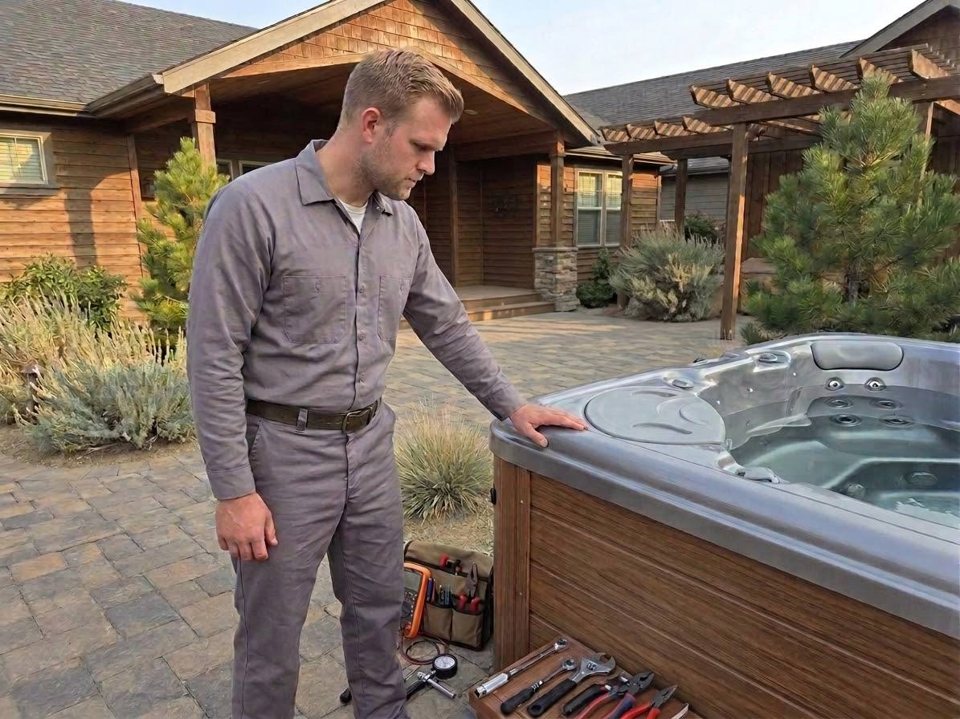
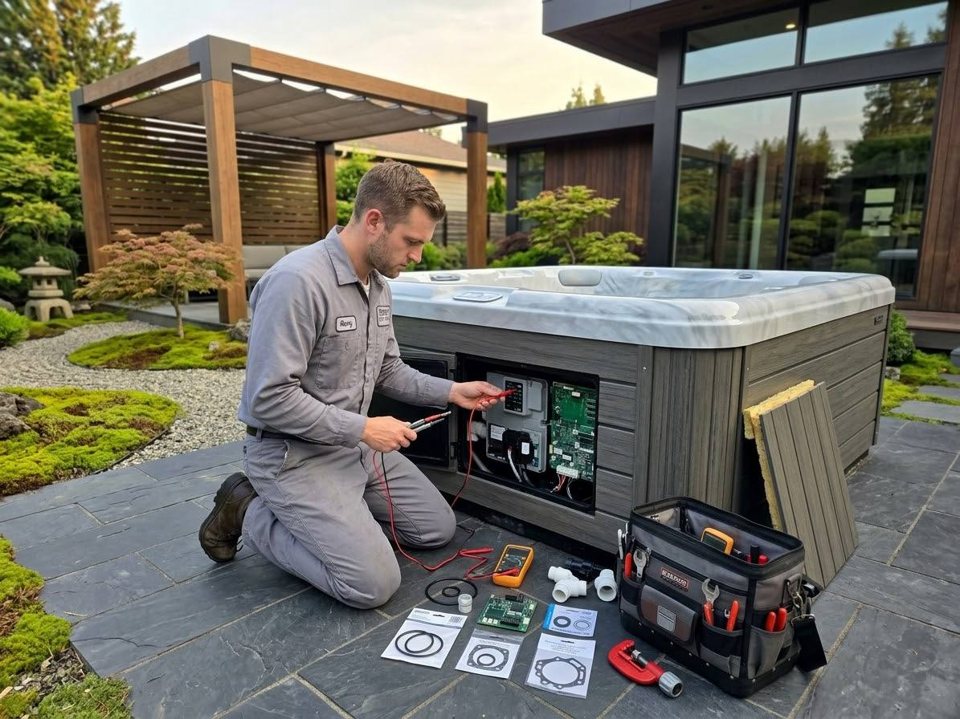
Pump & Motor Repair — how we work it
Half the 'dead pump' calls we take end with a capacitor or a seal, not a pump. The water side — impeller, shaft seal, housing — and the electric side — windings, bearings, capacitor — each fail in their own recognisable ways, and the repair bill depends entirely on which side of the bolts the trouble lives.
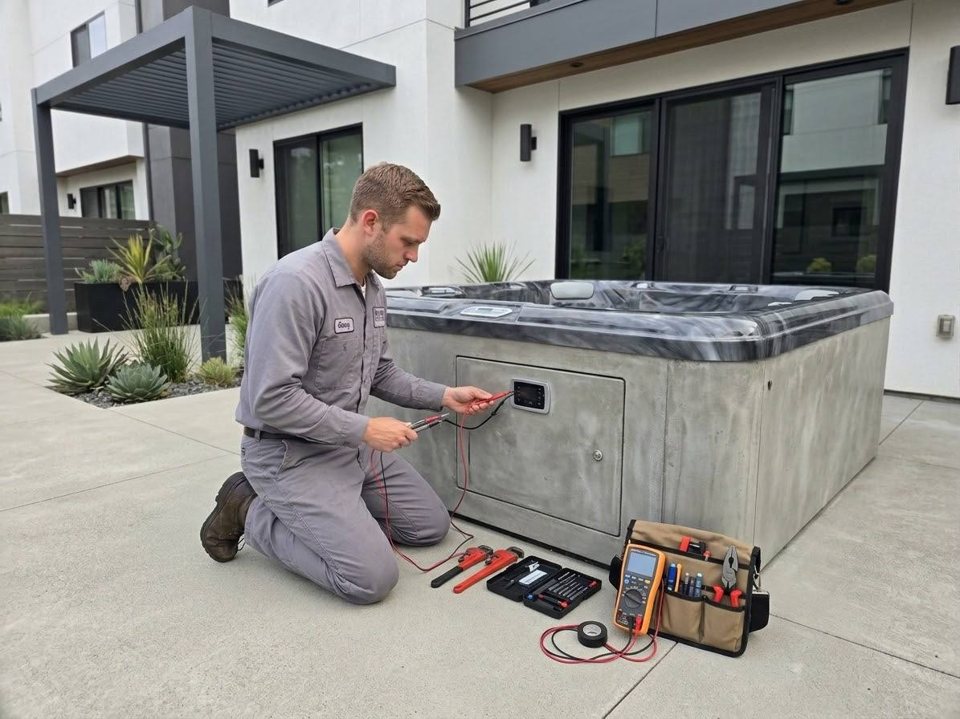
The local twist: mineral-heavy water eats shaft seals early, and a weeping seal quietly waters the motor bearings below it. Catch the drip and you buy a seal; miss a season and you buy a motor. Our advice is unglamorous — look under the tub occasionally.
What the symptom usually means
Hums, will not start
Capacitor down or impeller jammed. Both are tailgate fixes when caught before the windings overheat.
Whine that rises with speed
Bearings announcing the end. Weeks of warning, and the wet end usually survives if the motor is swapped in time.
FLO code, heater off
The pressure switch is not seeing flow — filter loaded with mineral, air trapped after a refill, or vanes worn round.
Drip under the wet end
Shaft seal. The cheapest failure on this page if it is fixed the month it starts.
The procedure
- Wet end and motor tested as separate assemblies
- Capacitors checked before any motor is condemned
- Frame, speed and horsepower matched on every replacement
- Two-speed and circulation pumps stocked for common frames
- Written figure before wrenches touch anything